
 Avalon Peninsula
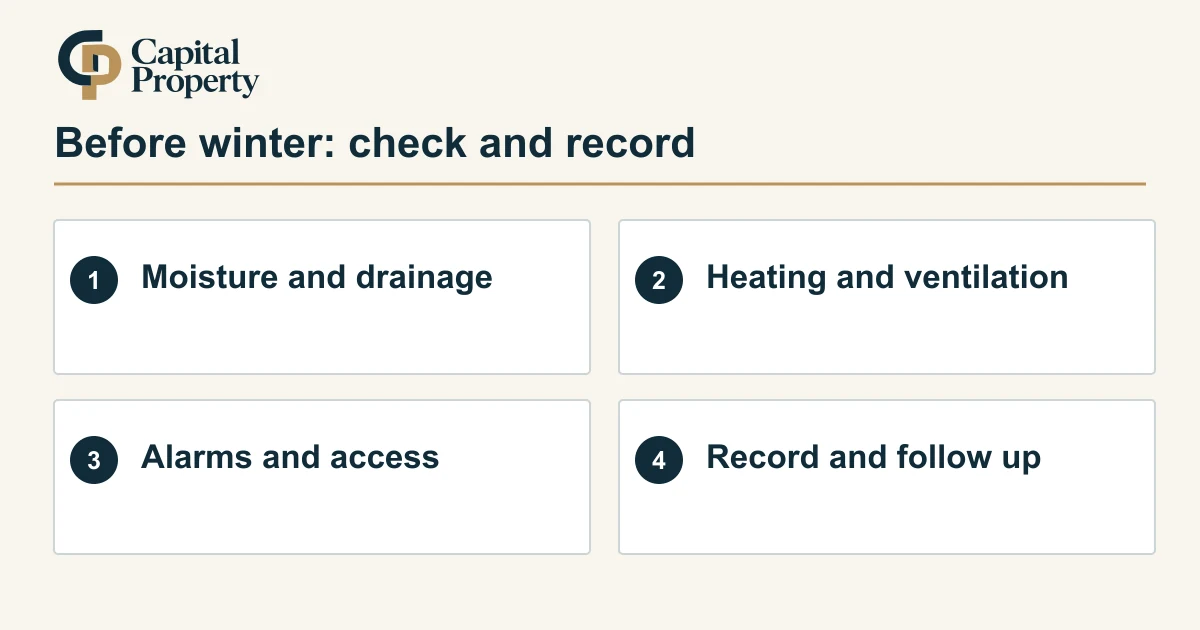
Before winter, give each rental property a short, recorded maintenance review. Start with anything that could affect safety or allow water into the building, then work through heating, ventilation and everyday wear. A checklist is most useful when each finding leads to a named person, a next step and a completion record.
By Capital Property. Sources checked . Check the linked sources for later changes.
Arrange the visit and review outstanding work
Check previous inspection notes and unresolved repair reports before making a new list. Arrange access in accordance with applicable tenancy requirements and the circumstances. Let occupants know the purpose of the visit and how to report an issue that appears afterward.
Do not wait for a routine visit to act on an urgent safety concern or active leak. Keep emergency instructions separate from the ordinary maintenance request process so nobody mistakes an emergency for a job to log and revisit later.
Look for water and drainage problems
From a safe ground-level position, look for damaged or missing downspouts, visible roof damage and water collecting beside the building. Arrange qualified help for roof work, work at height or an unclear source of water entry.
Inside, note damp patches, staining, persistent condensation and musty odours. Check accessible areas around plumbing and windows without opening walls or disturbing suspected mould. Health Canada emphasizes fixing the moisture source; seek qualified help where mould is extensive, recurring or its cause is uncertain.
Related sources: Health Canada: Addressing moisture and mould in your home; Nova Scotia home maintenance checklist (PDF, pages 2–3)
Confirm heating and ventilation maintenance
Check when the heating equipment was last serviced and follow its manufacturer's maintenance instructions. Arrange any overdue professional work. Health Canada recommends yearly professional inspection of fuel-burning appliances, including their chimneys and flues.
Check that accessible vents are unobstructed and that the filter maintenance schedule is being followed. Report unusual noises, odours or equipment problems to a qualified technician. Electrical repairs and work on fuel-burning equipment belong with qualified tradespeople, not an improvised seasonal repair.
Related sources: Health Canada: Improve indoor air quality in your home
Review alarms and everyday access
Review smoke and carbon monoxide alarms against manufacturer instructions and applicable local requirements. Record testing, battery replacement and replacement dates where relevant. A seasonal checklist does not replace the more frequent checks an alarm may require.
Look at entry lighting, steps, handrails and walking surfaces. Record loose components or other hazards for prompt attention. Confirm who handles snow and ice clearing, how problems are reported and what happens if the usual contractor is unavailable. Make the arrangement clear before the first significant snowfall.
Related sources: Nova Scotia home maintenance checklist (PDF, pages 2–3)
Turn observations into completed work
Use one maintenance log for each property. For every item, record the location, date noticed, description, urgency, assigned person and target date. Add relevant photographs without capturing occupants or unnecessary personal belongings. Keep access arrangements and contractor appointments with the same record.
Mark work complete only after the result has been checked. Save the invoice, service note or completion photo, and tell the occupant when a reported issue has been resolved. If a repair needs another visit, keep it open with a clear next step.
Set the next review
Put the next seasonal review in the calendar and revisit weather-related issues after significant storms when it is safe to do so. Give urgent findings immediate attention, then schedule the remaining work by priority. A short list that gets completed is more useful than a detailed inspection report nobody follows up.
Sources
- Health Canada: Addressing moisture and mould in your home. Moisture warning signs, prevention and when to seek professional help.
- Nova Scotia home maintenance checklist (PDF, pages 2–3). General seasonal maintenance reference, not Newfoundland and Labrador tenancy, entry or fire-code guidance.
- Health Canada: Improve indoor air quality in your home. Heating equipment, ventilation and manufacturer maintenance instructions.
General information only; not legal advice or a substitute for professional assessment.